Showing posts with label john c. maxwell. Show all posts

Sunday, September 29, 2013

Top 10 Leadership Books of all Time

7 comments:

Many an author have written books on leadership, and I would like to offer my own list (in no particular order) of the Top 10 Leadership Books of all Time.

I'd be interested in your opinion. Is this a good list of leadership books? Am I missing some important aspect of leadership that needs to be considered? Am I forgetting a great author of yours?

Top 10 Leadership Books of all Time

1. The Five Dysfunctions of a Team - Patrick Lencioni


Lencioni is challenging and forthright about what is the best way to show leadership within a team environment and tough leadership decisions that need to be made to create a healthy team.


2. The 7 Habits of Highly Effective People - Stephen Covey


 Still an absolute leadership book classic. Concepts that are pertinent to all areas of life: family, faith, business, nonforprofits, etc. Seek first to understand, how to manage priorities, and loads more. Click here for a summary of The 7 Habits of Highly Effective People.


3. Axiom - Bill Hybels


This is pretty frank and down the line. Some readers may not like the bluntness of some of what Hybels says in this leadership book, but I found it helpful.


4. Courageous Leadership - Bill Hybels


Another Hybel's leadership book. Courageous leadership was the first time I had heard about 360 degree leadership; you know the concept of leading down, across and up all at the same time?


 5. Developing the Leader Within You - John C. Maxwell


 John Maxwell we know has written many a book on leadership. I find in my circles, that he's either a leadership guru or you can't stand him. I learn much from one of his earlier books, Developing the Leader Within You, as it simply was a book that provided some bite-sized concepts of leadership to help grow me as a leader. Other Maxwell leadership books that have impacted many are:
21 Irrefutable Laws of Leadership and Developing the Leaders Around You


 6. Emotional Intelligence - Daniel Goleman


 Why is this one of my top 10 leadership books? Emotional Intelligence through the research and work of Daniel Goleman helped me understand much about leadership from not just an IQ perspective, but a EQ perspective. EQ is emotional intelligence, and is imperative that leaders have high emotional intelligence if they want to be able to cope with the demands of conflict resolution, change management and the like. For a detailed rundown of Emotional Intelligence click here.


7. Good to Great - Jim Collins


Jim Collins has a following now, after tireless years of research into books like Good to Great and Built to Last. There are concepts in this book that I can apply to my ministry as a Salvation Army officer, including concepts about level 5 leadership, getting the right people on the bus (first who then what), the hedgehog concept, confronting the brutal facts and having fanactical discipline.
For those in social sectors, there is a little follow up book that is helpful alongside Good to Great, called, Good to Great and the Social Sectors.


8. Leadership Next - Eddie Gibbs


 Eddie Gibbs is well versed in what it means to lead within the context of shifting generations. In the wake of postmodernism and the changes in focus and outlook on new generations, Leadership Next, looks primarily on how to lead effectively within the Christian faith. Much of what we give credence to in leadership, he challenges well!
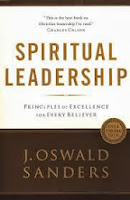


9. Spiritual Leadership - J. Oswald Sanders


 Sanders is pretty straight down the line with his outlook on leadership. Integrity is absolutely critical, a servant attitude is needed, and the ways of Jesus Christ need to be emulated to lead authentically. Be challenged by Spiritual Leadership!


10. The Truth About Leadership - James M. Kouzes and Barry Z. Posner


One of the key leadership teachings that comes out of this book is that credibility in the foundation of leadership. You can read more about this leadership book on a previous post I did.


There is more to be said. Why are there no women in my list? Can anyone recommend a leadership book written by women? If I added a book from the Bible, I would've added the book of Nehemiah. Nehemiah challenges us to be tenacious and finish what you started. Some also mention Sun Tzu's Art of War, but from a Christian perspective I really stuggled with it. The other book was How to Win Friends and Influence People from Dale Carnegie, and while I appreciate it has been a successful and popular leadership book over the years, I debate the authenticity of some of the premises within it. If you do this and say that and manipulate the situation correctly, you will win friends and thus have influence. That inauthentic way of leadership does not gel overly well with me.

Please comment below. What do you think are the top 10 leadership books of all time? Do you even care? What do you prefer to read?

God bless.

Pete.

Also: What are the differences/similarities between leadership and managment?


Submit your Email Address to Get Free latest Articles Directly to your Inbox

Friday, September 7, 2012

Law No. 13 - The Law of the Picture - John C. Maxwell's 21 Irrefutable Laws of Leadership

No comments:

John C. Maxwell's 21 Irrefutable Laws of Leadership - Law No. 13 - The Law of the Picture

'People do what People see'.

This leadership principle is really the old adage, that people will copy what you do, not what you say. Those of us with children know this well. We can tell our kids a thousand times to use their manners, but if we never use our manners, we will struggle to create that habit in them! They follow what you do, or rather, they do what they see.

In leadership we may well call this integrity; having our words line up with our actions. We may well label it as being authentic.

John Maxwell speaks of a leader from the military sector, known as Dick Winter. He would be the first out of the trenches inspiring his paratroopers to arise out of the ditches and push forward in battle. While the mild pacifist tendencies within me struggle a little with this story from the military, I don't want to lose sight of the purpose behind the story. Dick Winter summed up his own leadership in 2006 when he wrote, 'I may not have been the best combat commander, but I always strove to be. My men depended on me to carefully analyze every tactical situation, to maximize the resources that I had at my disposal, to think under pressure, and then to lead them by example.'

That's the leadership principle worth holding on to. 'To lead by example'. For a follower of Jesus, leading by example, means servant leadership. It means if you want to create a culture of people serving God, then leadership is probably best expressed in helping to clean the toilets occassionally! Servant leaders serve.

Whitley David says of leadership, 'A good supervisor is a catalyst, not a drill sergeant. He creates an atmosphere where intelligent people are willing to follow him. He doesn't command; he convinces.'

Norman Vincent Peale remarks on leadership that, 'Nothing is more confusing than people who give good advice but set a bad example.'

Albert Schweitzer (Nobel Peace Prize-winner) said, 'Example is leadership.'

I saw this clearly when I was a Youth Minister, and working with teenagers. You could say to them that having a good attitude was important, but if you didn't act in such a way that your actions were congruent with your words, it would fall on deaf ears. My character was in a sense more important than talking about my character. Leadership is best lived out by example, not rhetoric.

That's John C. Maxwell's Law of the Picture. "People do what people see." (adapted from The 21 Irrefutable Laws of Leadership)

*****

Receive Pete's Daily Devotions via email (below):

Enter your email address:


Delivered by FeedBurner

Monday, September 3, 2012

Law No. 12 - The Law of Empowerment - John C. Maxwell's 21 Irrefutable Laws of Leadership

No comments:

John Maxwell's cry here is that, 'Only secure leaders give power to others'. To empower others means to give others power, right? This means, to delegate, to pass on knowledge, to not do everything yourself. This is the key to leadership, to pass on power means to not think so highly of yourself, that you cannot have someone else fulfil the tasks at hand.

As Maxwell says, 'the only way to make yourself indispensable is to make yourself dispensable.’ We must empower others. We must not have what some call a ‘Messiah complex’. You know, the leadership mindset that no one can do the work better than us and we therefore remain privy to all the information, we control the process and we keep people from being involved. Let’s consider some examples of the law of empowerment.

Henry Ford is the prime example John Maxwell uses to explain the law of empowerment. In the early days of the Ford Motor Company, Henry Ford was a visionary. He made the car accessible to a wide audience, and Ford was booming. Though, Henry Ford was an autocrat. He withheld information. He was antagonistic. He was everything that empowerment is not. See, as Admiral James B. Stockdale says, ‘great leaders gain authority by giving it away’. Henry Ford held onto authority and thus disempowered people.

I think of a recent example of the newly elected Chief Minister of the Northern Territory (Australia), Terry Mills. He continually speaks of giving power away; of Government not holding on to all of the decision making processes. Giving power away (or rather empowerment), seems crucial to effective leadership.

As a follower of Jesus, let me give you a prime example of one who empowered others. Jesus Christ of a little town called Nazareth was born to a very average, normal kind of family. It was a miraculous birth, sure, but it was also a seemingly normal upbringing nonetheless. In just three years of public ministry, Jesus taught many the essence of empowerment. He taught the disciples, he sent the disciples out, and he debriefed with the disciples. Following his resurrection from the dead, the Gospel of John records Jesus telling the disciples, ‘I am sending you…’ Jesus ascended back into heaven, and the disciples were given power (empowered) to fulfill the mission of God. He pretty much was saying, ‘You know guys, this mission that I was a part of on this earth, is the same mission I’m giving you. Now go!’ That’s empowerment.


In applying the law of empowerment in your own leadership journey, consider these words from Maxwell:

Begin dwelling on people’s positive qualities and characteristics. Look for people’s strengths and envision how they could leverage those strengths to achieve significant things. Imagine what individuals could become if they made the most of their gifts and opportunities. Then help them to do so.  

God help us to empower others.

That was Law No. 12 – The Law of Empowerment – adapted from John C. Maxwell’s 21 Irrefutable Laws of Leadership.

I wrote a post on six elements of power, some of which are negative and some that are positive. This posts comes out of the teachings of John R. P. French and Bertram Raven in 1959, who highlighted 5 sources of power that we need to be aware of.


*****

Also have a look at the TOP 100 Leadership Tips here.

Receive Pete's Blog via email (below):

Enter your email address:


Delivered by FeedBurner

Thursday, July 19, 2012

The Most Important Truth About Leadership

6 comments:

Leadership is elusive. How can you gauge when you have mastered it (if there is such a thing)? How do you know if you are failing miserably? What is the most important factor in leadership? If someone knows the most important thing you need to know as a leader, then let the world know.

It might sound crazy to you, but I think God downloaded a one-liner that will revolutionize my future. It will stop me thinking about things out of my control. It will keep me focused. So, I'm about to give you t
he most important tip on leadership anyone could ever give you. Possibly.

We are bombarded with information in this age of technology and resource rich environment. In fact we have so much information and resources on our fingertips we at times are overwhelmed. Let's knuckle it down. What is the most important truth for a leader?


John C. Maxwell drilled down leadership to 21 Irrefutable Laws. Posner and Kouzes in The Truth About Leadership nailed down ten truths that encapsulate good leadership. Others like Pastor Bill Hybels have knuckled leadership down to four fundamentals, like vision and character. Authors like Jim Collins offer us insights into developing level 5 kinds of leadership. Stephen Covey leaved a legacy of 7 Habits of Highly Effective People and added an overarching 8th Habit later on.

I am about to give you the one most important leadership tip you will ever read. That may be a big call, and I am happy to hear something different on the matter! It will focus your leadership development, it will help you understand conflict, and it will help you realise the hurdles and the reason for the occasional stumble. It  will help you focus on what you can change, and not what you can't.

So, what is my most important truth about leadership? 

The number one leadership idea came to me while being a Leader on a Youth Camp. I was laying on the dormitory bed, reflecting on the day that had just been. I was reflecting on the challenges I was facing. I was thinking about the future, the possibilities, the change that could happen, the difference that could be made... I prayed. I asked God to equip me to be a better leader. 

Then something popped in my mind, that had me sitting up straight immediately. I call it a 'Word from the Lord', and some of you might just call it an idea that sprung into my head. It nonetheless lifted me from any sort of slumber and made me take notice.

Here it is...

"The greatest challenge you will ever face in leadership, is you."

I thought about this. Surely not?! What about Mrs. Jones, and that annoying manager, and that controlling so-and-so. What about the autocratic leader, or the unteachable team member, or the child who won't listen to the parent... No. The greatest challenge in your life, and your journey as a leader is and will always be, you.

I thought about my relationship with others. I considered all the times of conflict resolution and still thought to myself, 'Surely the greatest challenge is that other person.' Then I reflected a little further. 

If someone frustrates me, I am challenged to consider my response. If someone bad mouths me, I am challenged by how I handle the situation. If a project is not completed on time, I should not be blaming the part-time receptionist. If an employee has a character flaw, the greatest challenge personally is my capacity to graciously help the employee see what may need to change. If the team does not reach its goals, you generally fire the coach. 

See, the greatest challenge, and the most important truth about leader development, is the need to grow yourself. 

As a Christian, the challenge for me, is to be more Christlike, to grow in holiness and to let my life encapsulate Servant Leadership or Spiritual Leadership and be gracious, compassionate, and assertive in leadership that draws people together to change the world for God!

For you, in whatever field of work, and whatever your passions are, and whatever dreams keep you up at night, remember, the greatest challenge in leadership will always be... you.

Also have a look at the TOP 100 Leadership Tips here.


Sunday, July 15, 2012

A Definition of Leadership

No comments:

David V. Day and John Antonakis offer a comprehensive study into leadership with their textbook, The Nature of Leadership (2012). As difficult as it is to define leadership, they offer their definition of leadership before proceeding with their 600 page volume. They write:
...leadership can be defined in terms of (a) an influencing process-and its resultant outcomes-that occurs between a leader and followers and (b) how this influencing process is explained by the leader's dispositional characteristics and behaviors, follower perceptions and attributions of the leader, and the context in which the influencing process occurs (: 5).
As John Maxwell defines it simply (some say too simply), 'Leadership is influence, nothing more, nothing less'.

Two other aspects of leadership are worth noting and defining:
Leader Development - 'Leader development is the expansion of an individual's capacity to be effective in leadership roles and processes' (Van Velsor & McCauley, 2004).
Leadership Development - 'Leadership development is the expansion of an organization's capacity to enact basic leadership tasks needed to accomplish shared, collective work (Van Velsor & McCauley, 2004).

The challenge with leadership theory, is attempting to explain a somewhat intangible concept called, 'influence'. What behaviours and attributes do 'influential leaders' have? Why and how do people's perceptions of the capacity of a leader change? What leadership styles are needed in what contexts?

Defining leadership is difficult enough, but exemplifying leadership qualities and understanding the complexities that great leadership entails is another.

Also have a look at the TOP 100 Leadership Tips here.

Tuesday, July 10, 2012

Law No. 11 - The Law of the Inner Circle - John C. Maxwell's 21 Irrefutable Laws of Leadership

3 comments:

The leadership axiom from John Maxwell worth remembering about the law of the inner circle is, 'A leader's potential is determined by those closest to him'.

Very rarely will there be a successful leader in their field of work who has become an influential leader by themselves. Or rather, never has someone made a great, Godly impact on the lives of people, whether seeking justice, improving human rights, growing a ethical and profitable business, or witnessing the growth of a healthy Church without having people close around about them. If you can name someone, let me know.

When I think of Pastor leaders like Bill Hybels, Brian McClaren and Rob Bell, I imagine there are people in their 'inner circle' who encourage them, lift them up at times and who keep them on the straight and narrow.

When I consider Business leaders like Jim Collins, Jack Welch and Anita Roddick (founder of the Body Shop), I imagine people in their 'inner circle' who help them reach higher goals and dreams.

We may well think of leaders within the sporting arena like Michael Jordan (NBA Basketball), Lance Armstrong (Tour De France champion), or Mark Webber (Formula One) and we could find names of people who helped train them, encourage them, inspire them and push them to greater levels.

John Maxwell mentions the leader Billy Graham (Famous 20th Century Evangelist) and notes his inner circle that encouraged and inspired him in spiritual leadership - Ruth Bell Graham, Grady Wilson, Cliff Barrows and George Beverly Shea.

If we admit that in leadership, having a strong inner circle is paramount, that begs the next question. Who is in your close-kit team? How effective are these people in supporting you and lifting you up? How often do they encourage you and pray for you?

John Maxwell asks the following leadership questions in relation to your inner circle:

  • Do they have high influence with others?
  • Do they bring a complementary gift to the table?
  • Do they hold a strategic position in the organization?
  • Do they add value to me and the organization?
  • Do they positively impact other inner circle members?
I would ask a more simpler leadership question. Is this person the right person for such a time to be in my inner circle?

I have been blessed over the years to see God at work, as I have prayed and said, 'God I really need a right-hand man. I really am in need of someone to support me, encourage me, inspire me, to help me complete tasks, and to work closely with me in leadership to fulfil ministry visions. I can mention someone at most stages of my journey of leadership, that God used to be in my 'inner circle', to support me in those ways. May God do the same for you.

The right person will help you soar like a eagle, not waddle like a duck. They will work closely with you, support you through thick and thin, and will have enough character to exhibit traits like integrity, truth-telling, compassion and optimism.

Leadership has limited value and impact without a group of people working together cohesively.

Who is in your inner circle?
__________________________

Law No. 11 - The Law of the Inner Circle is part of John C. Maxwell's 21 Irrefutable Laws of Leadership.


Join the discussion on leadership and faith at Disciples in Training Page on Facebook.


Saturday, September 10, 2011

Law No. 10 - The Law of Connection - John C. Maxwell's 21 Irrefutable Laws of Leadership

No comments:

The Law of Connection says, 'Leaders touch a heart before they ask for a hand'.

John Maxwell is on to something here! I listened to a Christian evangelist preaching up a storm recently, and he knew something of the law of connection. He was preaching to a group of teenagers, most of who had never heard him preach, other than maybe looking at YouTube prior to the event. Did he just simply dive into his message? Did he just walk up to the stage, offload his theological persuasions, hoping someone might respond? He did quite the opposite. He began by playing his saxophone, to some background music, and got the crowd involved in singing some well known radio tunes. Why? Was it because he lacked enough content for a full sermon? No. He was building a connection with the listening audience. Then when he came to the crux of his message, he had people willing to respond. His name is Reggie Dabbs - YouTube him if you dare.

You may not be in the Christian ministry context, but the principle is the same. That's why Dale Carnegie (How to Win Friends and Influence People), highlights the point that if you walk into an unknown person's office, and you are seeking something from them, e.g. to sign over their money, you need to build a connection with them. He says that to make this connection you should quickly scan the room, and find something that you can talk about that connects with the person. I remember for instance walking into the office of a School Principal's office. I had never built a connection with this Principal before. As I entered the office, I scanned the room and saw a Certificate for being trained in Stephen Covey's The 7 Habits of Highly Effective People literature. I immediately leveraged off this to build a connection. I asked, 'How long have you been training people on the 7 Habits? It's a good book hey?' Very quickly I had built a connection. He began talking with excitement about The 7 Habits, and how he uses it to empower people to be better leaders.

While developing the connection with people is again, not rocket science, but John Maxwell is on the right track, and so many people miss it. They enter an important meeting with an executive and they talk more about themselves than anything else, and no connection is built. Or what about when you have two people on two different occassions speak on pretty much the same topic, and one of the communicators has connected with you so much more effectively? There are many factors involved in this connection, and some of them are:
  • Your respect for the communicator. The higher the respect, the greater the connection.
  • Their ability to emotionally connect with you, the listener. The greater the emotional connection, the greater the connection, e.g. they may share a story about being a foster child when they grew up, and if you were a foster child, you probably will feel an emotional connection.
  • The personality of the communicator and listener. Sometimes different personalities can either inspire us, or grate against us. An example being, that an organised, methodological kind of personality, may communicate about time management, and struggle to build a connection with a spontaneous, laissez- faire personality type. A communicator/leader who can build a connection with others across differing personality types is a seasoned professional!! 
  • Similiar likes and hobbies is an easy way that connections are built with others. You can hone in on the similarities and an emotional connection is established. We see this around the BBQ, when guys are talking about football, or cars, and a connection is built. 
Establishing a connection with another person is vital in leadership. A CEO who fails to emotionally connect or inspire his management team is on a road to failure. A Pastor who struggles to connect with their congregation, will constantly struggle to have support and 'buy-in' for their God-given dreams. A leadership trainer, who gather 15 people together for a session on 'Management styles in the 21st Century' for example, needs to build a connection with the listeners. The 15 will learn more if they emotionally connect with the trainer! That's a fact, and we all know it!!

So, how well do you connect with the different audiences/groups/meetings you take part in throughout your day? There are different techniques that can be used to connect with different size groups as well, and those of us who are leaders in these differing groups, must employ each of them to connect well in each context. Briefly, communicating to a large group, you might share a personal story that many can relate to. In a mid-size group, you might spend a moment thanking the people in the room that have helped to make the business/organisation what it is today. In a one-on-one meeting, you might, as mentioned, focus on the hobbies and passion of the one you are speaking with.

The Law of Connection from John Maxwell, puts some framework around what is intuitive to great leaders. You must connect with others before you can expect them to follow.
__________________________________
Acknowledgement goes to John C. Maxwell's 21 Irrefutable Laws of Leadership, from which he writes Law No. 10 - The Law of Connection.
__________________________________
Join www.facebook.com/petebrookshaw to continue discussion on leadership and Christian mission.
Also have a look at the TOP 100 Leadership Tips here.
__________________________________
  

Friday, August 26, 2011

Law No. 9 - The Law of Magnetism - John C. Maxwell's 21 Irrefutable Laws of Leadership

No comments:

The Law of Magnetism is taken from John C. Maxwell's, The 21 Irrefutable Laws of Leadership and says, 'Who you are is who you attract'.

I have my background in leadership within the church realm, and I have seen the law of magnetism very clearly. Churches with pastors with a young family, seem to attract members who have young families. Churches with leaders who are bible scholars and are strongly into dissecting the biblical writings tend to have people in their congregations who are analytical and passionate about this kind of study.

We only have to look to the business world for a second and we see the law of magnetism at work. Two young surfers, Doug Warbrick and Brian Singer, in 1969 began a now multi-million dollar industry called RipCurl. They initially sold surfboards, and then a year later expanded to sell wetsuits. Who do they attract to work at their stores? Well, the last time I walked through their shop at Torquay, Victoria, Australia (where they founded their business), the employees were young people who loved to surf! They attract to their business, the same kind of personality and interests that they have.

This is a natural part of leadership. We attract who we are. That's the law of magnetism. The challenge of leadership is to attract people who do not naturally connect with us. If you are a business leader, church leader, School Principal and so the list goes on, you cannot simply employ people who fit into your mold. We can't afford to have clones of leaders walking around our hallways. Why? To be really effective in an organisation you need a wide variety of views, of personalities and leadership styles. Without this kind of variety, you end up with Henry Ford clones, who only make their Fords black. While my personality is not attracted to the dry, analytical, systems-driven kind of person, I need this person around me at times, to help pick me up in areas I would not see. If you are a visionary, having someone who can see the nuts and bolts of the whole picture is someone you probably need on your leadership team!

So, while John C. Maxwell's law of magnetism is true, we need to challenge ourselves to find ways to connect with differing personalities and to have people on our leadership teams who see things from a different angle. We attract who we are, but that is not necessarily the only people we can attract to our goals and vision.  
________________________________

Also have a look at the TOP 100 Leadership Tips here.
The law of Magnetism is law no. 9 and continues our look at John C. Maxwell's 21 Irrefutable Laws of Leadership.

Wednesday, August 24, 2011

Law No. 8 - The Law of Intuition - John C. Maxwell's 21 Irrefutable Laws of Leadership

No comments:

John C. Maxwell's Law No. 8 is the Law of Intuition.

"Leaders evaluate everything with a leadership bias" - John C. Maxwell.

Great leaders are ones who have intuition. You know, that sense within that you should head a certain direction, or the inkling that there are people on the leadership team who are not with you. Intuition is seen on the sporting field when the sportsman knows to run left and anticipates the play. Intuition is witnessed in a leadership meeting, when the leader says, 'You know what, I have a feeling we should be investing our money into that new product.' Intuition occurs in the church, when someone discerns that a new direction is needed, even though this may not be the popular view.

Dictionary.com defines intuition as, 'Direct perception or truth, fact, etc, independent of any reasoning process'. Some people have intuition and some do not. This has always puzzled me. How do you teach someone to have intuition? How do you teach someone to be intuitive, and look at a situation and understand the right direction or the right answer to the problem? Within Christianity, some would say people at times are given the 'gift of wisdom' to know the right response for the moment. You could say, people have an inbuilt intuitive nature. Though, like any leadership quality, intuition can be developed.

Say for instance you are the owner of a local cafe, that serves great hot food to the community, with your freshly baked pies and pasties, and your homemade vanilla slice. The sales have declined recently and you just know what you need to do. Your intuition kicks in. Even before you re-do a demographical study of your city, and a survey of people's taste habits, you just know you need to implement some healthier choices on the menu. Other people say to you, 'But you're going to loose what makes you unique as a Cafe!' You decide to implement a new menu, that incoporates the healthier choices, and your intuition was right, sales increase, and your brand loyalty strengthens despite what the nay-sayers said.

This example is simplistic, but it does highlight intuition. Leadership intuition, is really that inner thought, or perception to make a particular change in an organisation. As you understand your organisation/group better, intuition will come more naturally. The successes and failures of the past, help to sway you a particular direction that you know you should take. Without being arrogant, at times your intuition is strong enough to not have to concede to the other opinions around you. Let me qualify this by saying, it is important to seek advice and colloboration, but at times, because of your experience in leadership and the organisation in which you are a part, you have the intuition to know what to do.

Question then: How do you develop intution? I believe that when you grow and develop within your particular field, whether it be science, religion, politics, entertainment, etc, you understand the environment better. You begin to perceive future trends because you have a good grasp on the field you are in. John C. Maxwell writes, 'Natural ability and learned skills create an informed intuition that makes leadership issues jump out at leaders' (: 82). Your decisions, while backed up by research, teaching and the opinions of peers, managers, etc, when interwined with your intuition, there exist a greater potential for having a greater effect on your situation. 

John C. Maxwell says the following, that:
  • Leaders are readers of their situation

  • Leaders are readers of trends

  • Leaders are readers of their resources

  • Leaders are readers of people

  • Leaders are readers of themselves (: 82-83).
Growing leaders, will grow their intution. As they understand their situation better, they will have better intuition. As they understand future trends they will enhance their intuition. As they are wise in their use of resources, their ability to be intuitive in their use will increase. As leaders understand people better, and motivate people more effectively, they will have the intuition to respond to people issues/problems well. Finally, as leaders are able to 'know thyself', and have a clearer picture of themselves, and become less clouded by their own mistakes, they will find their ability to intuitively know the response to make in a given situation increase. Leaders evaluate everything with a leadership bias.

___________________________________

Also have a look at the TOP 100 Leadership Tips here.
This is John C. Maxwell's 'Law of Intuition' (Law No. 8) adapted from his 1998 classic, 'The 21 Irrefutable Laws of Leadership'.

Tuesday, July 19, 2011

Law No. 7 - The Law of Respect - John C. Maxwell's 21 Irrefutable Laws of Leadership

2 comments:

Law No. 7 in John C. Maxwell's 21 Irrefutable Laws of Leadership is The Law of Respect.

A small group gathers together to develop an idea from head office. Now, if the team is not appointed with a leader, what will happen? Initially there may be some discussion, debate, and ideas flowing forth. As the team gets to know each other, normally the strongest leader in the team will be easily identified. You know what I mean, the leader who seems to have integrity, self-assertiveness, wisdom and maturity. The law of respect, simply says, that in this situation, the team will naturally follow the strongest leader in the team. That's the law of respect - 'People naturally follow leaders stronger than themselves'.

Think of a leader that you follow that inspires you. You respect them right? Also, they most likely are a stronger leader than you, correct? You follow them, because of what they have done in your life, what they have done for in an organisation/s or what they have done to inspire people to reach their potential. We naturally follow leaders stronger than ourselves. I know this to be true for me.
____________________________________

To Continue discussion on leadership go to "Disciples in Training" on Facebook.
____________________________________

John Maxwell shares the story of a lady you might not expect to be a strong leader, in a worldly sense; she didn't have the looks for it and she didn't have qualifications. In fact she grew up as a slave in the early-mid 1800s. Her name was Harriet Tubman. What an inspiring story of someone who chose to free other people from slavery, and risking her life for their freedom. They called her Moses, and as Maxwell writes, 'By the start of the [American] Civil War [1861-1865], she had brought more people out of slavery than any other American in history. Harriet Tubman had people who respected her, for her commitment to ending slavery, and people followed her. For more on Harriet Tubman's story, check out Wikipedia.

This is John C. Maxwell's Law of Respect (Law No. 7), from his bestselling book, The 21 Irrefutable Laws of Leadership.

Friday, July 15, 2011

Law No. 6 - The Law of Solid Ground. John C. Maxwell's 21 Irrefutable Laws of Leadership

No comments:


Law No. 6 - The Law of Solid Ground. John C. Maxwell's 21 Irrefutable Laws of Leadership
.

Trust is the foundation of leadership

The newpaper headlines have been damning for media tycoon Rupert Murdoch of late. His famous UK newspaper, 'News of the World' has already closed its pages for the last time. Now his entire financial empire is in question. Will this multi-millionaire lose much of what he worked so hard to gain? So why is the rug being swept out from under his feet? Primarily because of one word: Trust. The media mogul is being investigated because employees in his workplace were allegedly hacking people's mobile phones to access inside information in order to sell newspapers. The scandal runs deep and wide, and Rupert Murdoch is one man who now probably wishes the media wasn't such a powerful machine, that is able to tarnish his name and brand so quickly. Though, a breaking of trust can do that.

See, trust is the foundation of leadership. You rip trust away from an organisation, and you rip away the fabric that was holding the organisation together. You have someone who becomes untrustworthy and you find their influence, their relationships and their ambitions are affected. Good leaders on the other hand understand the importance of trust and developing trust amongst their family, friends and colleagues. Trust is built over time, through the consistent integrity of the choices a leader makes. While trust takes so long to build, one unethical or moral mistake can break trust within minutes. Think about the following things that can easily break trust in a relationship:

  • Sexual misconduct
  • Sudden outburst of anger
  • Breaking an important promise
  • Continually breaking smaller promises
  • Favouritism
  • Harassment
  • Neglect
  • Micro-managing
  • Lack of self-control
The list goes on. John Maxwell says, 'To build trust, a leader must exhibit competence, connection and character.' When speaking of character, think of the fruits of the Spirit mentioned in the Bible in Galatians 5:22 - 'The fruit of the Spirit, is love, joy, peace, patience, kindness, goodness, faithfulness, gentleness and self-control.' All leaders and aspiring leaders, could all do with more of those characteristics! With integrity and character that exemplifies those fruits, you are sure to be a leader who is fundamentally trustworthy in all aspects of life. When you combine this with competence, Stephen Covey says, 'the fruit is wisdom and judgment- the foundation of all great and lasting achievement and trust.' (The 8th Habit, p. 149). 


General H. Norman Schwarzkopf (Cited in Stephen Covey's The 8th Habit, p. 151) says, 'I've met a lot of leaders in the army who were very, very competent. But they didn't have character. For every job they did well in the Army, they sought reward in the form of promotions, in the form of awards and decorations, in the form of getting ahead at the expense of somebody else, in the form of another piece of paper that awarded them another degree...a sure road to the top. You see, these were competent people, but they lacked character. I've also met a lot of leaders who had superb character but who lacked competence. They weren't willing to pay the price of leadership, to go the extra mile because that's what it took to be a great leader. To lead in the twenty-first century...you will be required to have both character and competence.' - And then, can I say, you will have trust! Trust is the foundation of great leadership.


Trust is but one part of a leaders arsenal, if you like. While there are many other aspects to effective leadership, without trust, you simply do not have a good foundation in which to build anything else.

_______________________________

John C. Maxwell's Law No. 6 - The Law of Solid Ground - 'Trust is the foundation of leadership'.  From The 21 Irrefutable Laws of Leadership. Also, look at Stephen Covey's The 8th Habit.

Law No. 5 - The Law of E. F. Hutton - John C. Maxwell's The 21 Irrefutable Laws of Leadership

No comments:

Law No. 5 - The Law of E. F. Hutton - 'When the real leader speaks, people listen' (John C. Maxwell)

John C. Maxwell names this leadership principle after a brokerage firm called E. F. Hutton & Co. that was founded in 1904 and became a well known, well respected financial firm in the United States. In the 70s and 80s they ran an advertising campaign that used the catchcry, 'When E. F. Hutton talks, people listen.' Maxwell alters the catchcry and says, 'When the real leader speaks, people listen'.

I've seen this leadership principle at work in many situations. You're sitting around the board room, and little Johnny presents his idea to the leadership team. A few people offer some quick, insightful comments. The introverts sit back and ponder the possible changes. Some small talk ensues, until eventually someone who everyone respects and admires offers their opinion. The small talk ceases, and people find themselves listening intently to what this leader has to say. It seems true, that when the real leader speaks in a given circumstance, people listen.

I recall a time when Salvation Army leaders, employees and volunteers gathered together to talk about the future work of The Salvation Army. About 80 people were present at the open forum, and people were periodically standing up, offering a comment, question or a passionate political statement. Chatter occurred following many questions and different people offered their answers. I remember the moment. The chattering was soft and consistent, after someone had offered a comment that was particularly controversial. A retired General of The Salvation Army stood to make a comment (Rtd. General Eva Burrows), and within seconds there was silence. I mean, absolute silence. She spoke with boldness and conviction, and offered her point of view. It dawned on me very quickly, the leadership principle we are discussing; that when the real leader speaks, people listen.

The fact is, people want to hear the opinions of people with influence. That is why we stay up late and watch the current affair's shows, with their interviews of leaders like politicians and CEO's. That's why we are glued to the television when a chat show is on with someone we admire. We wonder what their opinion will be; we wonder whether they will offer an insightful comment that is worth adding to our leadership bag.

As my wife and I, along with a handful of others sat to discuss John Maxwell's laws of leadership (back in 2001), we came to this law. The law of E. F. Hutton. It was interesting, because I was rattling off some leadership content, and no-one was paying close attention, until my wife spoke. She said something profound, and then we all thought about what had just happened. When the real leader spoke, the people listened! We just sat there laughing, as I felt a little kick in the guts, but was happy that we were all connecting with the leadership material.

We develop opportunities to be listened to, as a leader, in many different ways. Some of the ways we are further blessed with the ability to communicate to others is through:
* Our character - Being someone who has integrity, someone people trust, and someone with a strong sense of morality.
* Our experience - People gain respect for leaders who have 'been through' events, and have the experience to back up what they're saying. Think through leaders who share about a social justice project AFTER they have just been overseas to witness it first hand, and have also given a sum of money to support the cause.
* Our knowledge - When we have a deeper knowledge of the organisation/circumstances in which we are communicating, people tune in. They want to hear our opinions, because they trust that we know what we are talking about.

Our aim is to be a better leader and a better communicator. Why? Not because of reasons the world throw at us; for some self-aggrandizement, but because we wish to create change in the world, and communicate injustice and truth to the world around us.

"When the real leader speaks - people listen." Do you hear what I'm saying??

Wednesday, July 13, 2011

Law No. 4 - The Law of Navigation - John C. Maxwell's 21 Irrefutable Laws of Leadership

No comments:

Leadership Law No. 4 - The Law of Navigation


How many leaders do you know that have dreams and visions and then seem to lack the capacity to lead the team to the destination? As a leader, I can vouch for struggling with the law of navigation.


A dream pops into your mind, and you begin with all guns blazing; you write down some ideas and tell some people about it. You gather the support of the leadership team, and you inspire the team to dream of the impossible and everyone is initially motivated. But what next? Without being able to navigate, or plan the way to the final goal, you end up wandering around in circles, and the team is deflated and as the leader you are worn out.


You can't get Apollo 11 onto the lunar surface in 1969, without some navigation. A dream in itself won't cut the mustard. A fleeting idea of one day reaching the moon won't get you far. You must 'chart the course' as John Maxwell highlights. Visionary leadership is needed. He uses the following acrostic:


Predetermine a course of action
Lay out your goals
Adjust your priorities
Notify key personnel


Allow time for acceptance
Head into action
Expect problems
Always point to the successes
Daily review your plan (1998: 40)


An important part of the law of navigation is the daily reviewing of the plan. You could work out where you are going, set some goals and begin working towards them, but without regular revising of where you're headed, you might find yourself heading in the wrong direction! That's a leadership nightmare! You know the fact that if you begin walking in a 5 degree angle off the main track, within a few kilometres you're lost!


A strong leader must be able to navigate the organisation or team to the end result. Constantly re-check the scope of the goal/project and make the adjustments necessary. Some of the adjustments might be related to finances, personnel, resources, time schedules, etc. Don't start wandering down rabbit warrens. Keep the final aim in view, and adjust the plans accordingly.
__________________


John C. Maxwell's Law of Navigation is law number 4 from his book, The 21 Irrefutable Laws of Leadership.

Saturday, July 9, 2011

Law No. 3 - The Law of Process - John C. Maxwell's 21 Irrefutable Laws of Leadership

1 comment:

Law 3 - The Law of Process

In this law, John C. Maxwell is simply saying that leadership is not developed just in a day. We don't wake up one morning and all of a sudden we have leadership expertise running through our veins. Leadership is developed daily. It is developed through our consistent growing, learning, stretching, reading, attempting and perseverance.

John Maxwell outlines the four phases of leadership growth, and they are:
Phase 1 - I don't know what I don't know
Phase 2 - I know what I don't know
Phase 3 - I grow and know and it starts to show
Phase 4 - I simply go because of what I know

Honestly, from starting work as a full-time Salvation Army minister (2009), I have witnessed my development through these stages. Lets take the example of filling out the financial records. My first attempt saw me in phase 1 - I didn't know how to fill out the paperwork, and I wasn't even sure who to ask for help. As I began to learn the financial system, I began to see the mistakes I was making (phase 2), and over time I have been able to fill out the finances myself! Now, I'm proud to say I'm finally in phase 4, where I can complete the work, fairly quickly and accurately. We are really at different stages on different aspects in leadership. Currently we are embarking on a building project in my local Church, and I feel once again, that I'm back in the early phases trying to understand the process, and learning how to lead effectively within the whole process.

What is leadership development?

Leadership development is more than just learning leadership techniques. You might know all the leadership techniques in the world (congratulations!), but if you don't know the systems and processes for the task you are completing, then it is still difficult! Leadership capacity coupled with a great understanding of the tasks you are completing, is a powerful combination.

The point of this leadership law, is that to grow to become a great leader, with the right values and qualities, and the right skills, develops over time, and not in a day. As a young leader, I have to discipline myself to learn and grow, so that I can become, by God's grace, a better leader. There are days, honestly, when you feel like, you will never 'arrive' at the place you want to be, though my hunch is that even leaders in their sixties and seventies still have that feeling! Be encouraged to continue to grow and learn, no matter what your age, and no matter what you 'have achieved' and what you are dreaming about.

Law No. 2 - The Law of Influence - John C. Maxwell's 21 Irrefutable Laws of Leadership

No comments:

Law 2 - The Law of Influence

John C Maxwell says, that 'leadership is influence', nothing more, nothing less. While this statement may not be 'irrefutable' as the title of his popular book says, the fact is leadership encapsulates influence. A good leader has vision and purpose, and while reaching towards the clouds, influence is what helps fulfill the dreams of the leader. Maxwell writes, 'The true measure of leadership is influence...' It is safe to say, that without influence, a leader does not have the ammunition, if you like, to reach the goals or the resources and capacity around to reach the destination.

Maxwell speaks of the death of Princess Diana, that stopped the world in its tracks. This was a lady with influence, that captured the hearts of the people. The question I ask, is how do you increase your influence? Also, is influence always a good thing?

Firstly, influence can be used for good or evil. No doubt we are aware that Hitler had influence, but his warped regime characterises evil and is not the kind of influence we want. Lets assume, the influence we have, is not for some self-aggrandizement, like some tele-evangelist with a bulging bank balance. Lets assume, building influence is about bringing great change and transformation to the causes we are passionate about. Building influence in order that multi-million dollar companies might embrace the Fair Trade movement is great. Building influence within a Church building project, may involve having the leaders, the skills, and the finances at your fingertips so that the God-given dream will succeed. Influence need not be a scary thing, or something to be overly wary of, as long as we are dealing with 'power' in all its forms, and only allowing influence to be used for good, ethical causes.

Secondly, to the question of how we increase influence (not necessarily just personally, but maybe the influence of a church, organisation, etc), here are some thoughts:
* Build trust with others
* Learn to have self-assertiveness and to be decisive
* Be a positive leader
* Take others with you on the journey
* Pray and believe the Bible
* Be faithful, obedient and have integrity in all things
* Learn to communicate effectively

Influence is a questionable attribute for some. A Christian may claim that influence is unbiblical and the goal to become a person of influence is not God's desire for someone. The thesis being, that God is the only one who will and can make someone influential, and is not something humans should strive after. I agree partly with this assertion, though, I believe strongly in the words of Romans 12:8 that says we all have different gifts given to us, and if it is leadership, then, 'lead diligently'. If we are called by God to be a leader, then we are responsible to grow as a leader, and be faithful in reading, learning and developing, in order that we may lead diligently. Influence is not synonymous with power in a worldly sense, but simply characteristic of strong leadership.

Remember Law No. 2 - The law of Influence - From John C Maxwell's 21 Irrefutable Laws of Leadership.

Friday, July 8, 2011

Law No. 1 - The Law of the Lid - John C. Maxwell's 21 Irrefutable Laws of Leadership

No comments:

Law 1 - The Law of the Lid

John C Maxwell says that, 'Leadership ability determines a person's level of effectiveness'. This leadership lesson is about the fact that people, or organisations will only ever go as far as the leader that is leading them. If the leader only leads at a level of say 4 out of 10, then the people they lead, or the organisation they are the leader of, will only ever get to around 4 out of 10. We see this leadership principle all around us. Think of a school with a mediocre principal, or a festival run by a incompetent coordinator or a military campaign with an ineffective leader; we know the effects of mediocre leadership.

Our aim, is to lift our lid; to lift our lid on our ability to lead. What are some practical ways we can become better leaders?

  • Read a leadership book
  • Have a mentor who is a great leader
  • At the start of each day, think about what your purpose is, and don't be distracted by expectations that do not fulfill your purpose - or rather, don't consume your time with things that do not add value to becoming a better leader.
  • Become well versed in our area of work, e.g. if you are an engineer then know your engineering and physics well, so that you can lead more proficiently.
  • Develop your leadership skills daily - read, reflect, develop yourself.
  • Have a look at www.mindtools.com for a site with leadership and management tips and resources.


Remember Law No. 1 from John C. Maxwell's 21 Irrefutable Laws of Leadership - The Law of the Lid.

"The higher you want to climb, the more you need leadership. The greater the impact you want to make, the greater your influence needs to be" (John C Maxwell).

To continue the discussion join our "Disciples in Training" Page on Facebook.

Popular ALL TIME Posts

PeterBrookshaw.Com

Translate