Many an author have written books on leadership, and I would like to offer my own list (in no particular order) of the Top 10 Leadership Books of all Time.
I'd be interested in your opinion. Is this a good list of leadership books? Am I missing some important aspect of leadership that needs to be considered? Am I forgetting a great author of yours?
 Lencioni is challenging and forthright about what is the best way to show leadership within a team environment and tough leadership decisions that need to be made to create a healthy team.
 Still an absolute leadership book classic. Concepts that are pertinent to all areas of life: family, faith, business, nonforprofits, etc. Seek first to understand, how to manage priorities, and loads more. Click here for a summary of The 7 Habits of Highly Effective People.
 This is pretty frank and down the line. Some readers may not like the bluntness of some of what Hybels says in this leadership book, but I found it helpful.
 Another Hybel's leadership book. Courageous leadership was the first time I had heard about 360 degree leadership; you know the concept of leading down, across and up all at the same time?
 John Maxwell we know has written many a book on leadership. I find in my circles, that he's either a leadership guru or you can't stand him. I learn much from one of his earlier books, Developing the Leader Within You, as it simply was a book that provided some bite-sized concepts of leadership to help grow me as a leader. Other Maxwell leadership books that have impacted many are:
21 Irrefutable Laws of Leadership and Developing the Leaders Around You
 Why is this one of my top 10 leadership books? Emotional Intelligence through the research and work of Daniel Goleman helped me understand much about leadership from not just an IQ perspective, but a EQ perspective. EQ is emotional intelligence, and is imperative that leaders have high emotional intelligence if they want to be able to cope with the demands of conflict resolution, change management and the like. For a detailed rundown of Emotional Intelligence click here.
 Jim Collins has a following now, after tireless years of research into books like Good to Great and Built to Last. There are concepts in this book that I can apply to my ministry as a Salvation Army officer, including concepts about level 5 leadership, getting the right people on the bus (first who then what), the hedgehog concept, confronting the brutal facts and having fanactical discipline.
For those in social sectors, there is a little follow up book that is helpful alongside Good to Great, called, Good to Great and the Social Sectors.
 Eddie Gibbs is well versed in what it means to lead within the context of shifting generations. In the wake of postmodernism and the changes in focus and outlook on new generations, Leadership Next, looks primarily on how to lead effectively within the Christian faith. Much of what we give credence to in leadership, he challenges well!
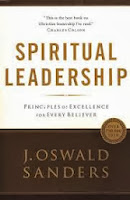 Sanders is pretty straight down the line with his outlook on leadership. Integrity is absolutely critical, a servant attitude is needed, and the ways of Jesus Christ need to be emulated to lead authentically. Be challenged by Spiritual Leadership!
 One of the key leadership teachings that comes out of this book is that credibility in the foundation of leadership. You can read more about this leadership book on a previous post I did.
There is more to be said. Why are there no women in my list? Can anyone recommend a leadership book written by women? If I added a book from the Bible, I would've added the book of Nehemiah. Nehemiah challenges us to be tenacious and finish what you started. Some also mention Sun Tzu's Art of War, but from a Christian perspective I really stuggled with it. The other book was How to Win Friends and Influence People from Dale Carnegie, and while I appreciate it has been a successful and popular leadership book over the years, I debate the authenticity of some of the premises within it. If you do this and say that and manipulate the situation correctly, you will win friends and thus have influence. That inauthentic way of leadership does not gel overly well with me.
Please comment below. What do you think are the top 10 leadership books of all time? Do you even care? What do you prefer to read?
God bless.
Pete.
Also: What are the differences/similarities between leadership and managment?
 Submit your Email Address to Get Free latest Articles Directly to your Inbox
I'd be interested in your opinion. Is this a good list of leadership books? Am I missing some important aspect of leadership that needs to be considered? Am I forgetting a great author of yours?
Top 10 Leadership Books of all Time
1. The Five Dysfunctions of a Team - Patrick Lencioni
 Lencioni is challenging and forthright about what is the best way to show leadership within a team environment and tough leadership decisions that need to be made to create a healthy team.
2. The 7 Habits of Highly Effective People - Stephen Covey

3. Axiom - Bill Hybels

4. Courageous Leadership - Bill Hybels

5. Developing the Leader Within You - John C. Maxwell

21 Irrefutable Laws of Leadership and Developing the Leaders Around You
6. Emotional Intelligence - Daniel Goleman

7. Good to Great - Jim Collins

For those in social sectors, there is a little follow up book that is helpful alongside Good to Great, called, Good to Great and the Social Sectors.
8. Leadership Next - Eddie Gibbs

9. Spiritual Leadership - J. Oswald Sanders

10. The Truth About Leadership - James M. Kouzes and Barry Z. Posner

There is more to be said. Why are there no women in my list? Can anyone recommend a leadership book written by women? If I added a book from the Bible, I would've added the book of Nehemiah. Nehemiah challenges us to be tenacious and finish what you started. Some also mention Sun Tzu's Art of War, but from a Christian perspective I really stuggled with it. The other book was How to Win Friends and Influence People from Dale Carnegie, and while I appreciate it has been a successful and popular leadership book over the years, I debate the authenticity of some of the premises within it. If you do this and say that and manipulate the situation correctly, you will win friends and thus have influence. That inauthentic way of leadership does not gel overly well with me.
Please comment below. What do you think are the top 10 leadership books of all time? Do you even care? What do you prefer to read?
God bless.
Pete.
Also: What are the differences/similarities between leadership and managment?
Submit your Email Address to Get Free latest Articles Directly to your Inbox
 |  |  |  |